

Welcome back, friends.
Welcome to the 18 new subscribers—thanks for joining! Each issue of Path Nine is packed with meditations on work, productivity, tech, and entrepreneurship.
Today’s post is a look into the two bookmarks of a long, housing-related journey. For anyone thinking about moving, I hope you find it valuable.
Alright, let’s dive in.
Before we begin: If you’re reading this but haven’t subscribed to PATH NINE, hit the button below to join creative entrepreneurs that read PATH NINE to learn the strategies reshaping our work and lives.

A little over two years ago, my wife and I spent countless nights hunched over blueprints of our dream house. We were building a house in a quiet town a few hours outside Seattle. It felt like the perfect place—safe, slow, and calm. It was the kind of choice that seemed obvious during COVID when so many were rushing to trade chaotic cities for simpler living.
But our conversations weren’t really about the house, or at least not only about the house.
We were talking about the life we believed we wanted.
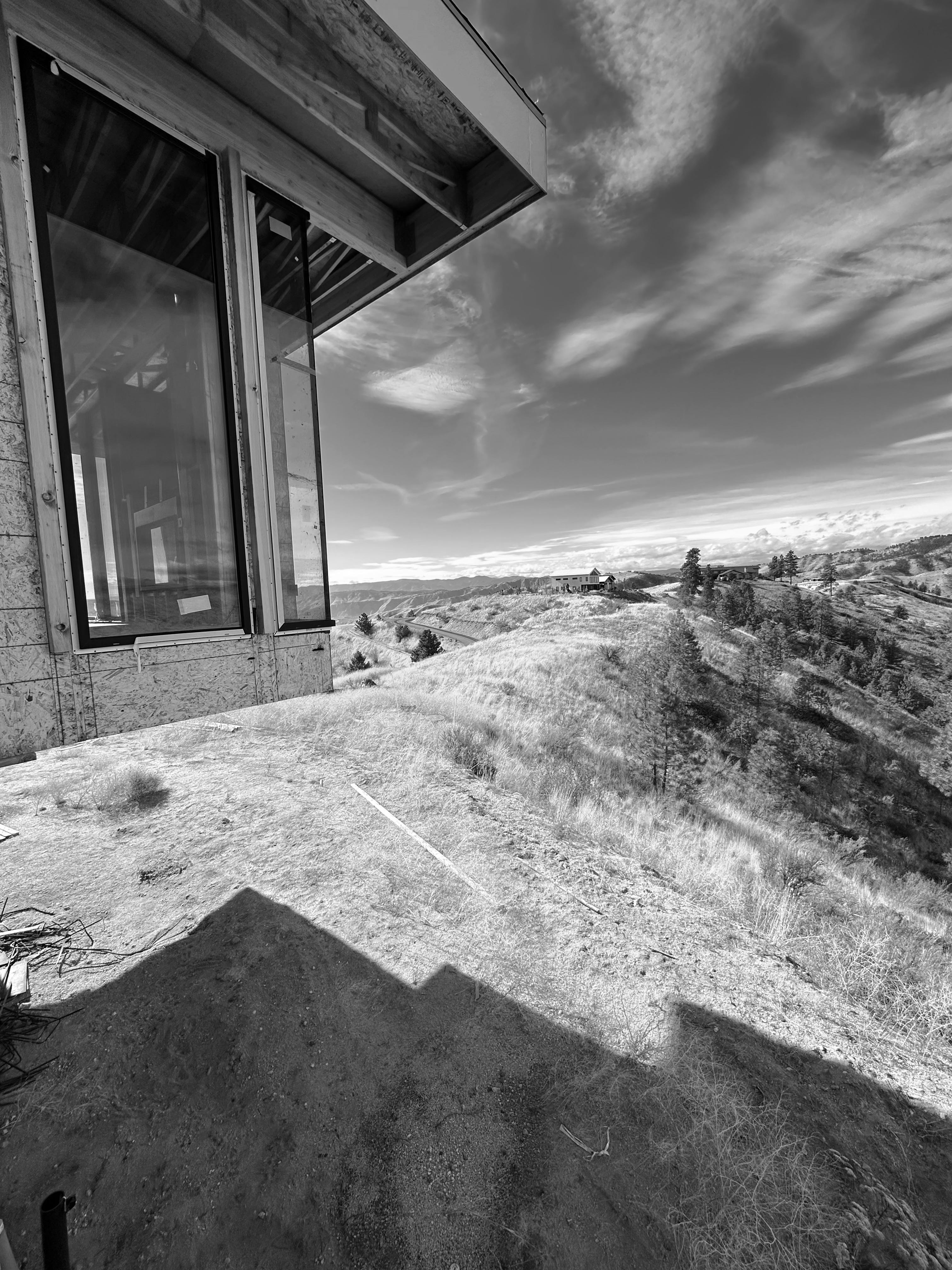
The house we were building was falling apart almost as fast as we were building. We’d unintentionally found ourselves locked in with a builder who just couldn’t get the job done. I wrote a little about it a few years ago when we were in the thick of it.

I still remember that snowy day, walking up the long driveway toward what should have been our dream home. As I got closer, all I saw were the flaws. A misplaced stair nearly tripped me up. I found a wall so poorly finished that sunlight streamed through its edges. A supposedly secure window wall shifted if I so much as nudged it.
Everywhere I looked, there were problems:
A bowed roof weighed heavy with snow, sagging because the builder replaced trusses without approval.
Beams slanted awkwardly across picture windows, clearly deviating from the plans.
A large opening sat empty because the custom glass didn’t fit—it was never built to spec.
The house—and the dream—felt like it was crumbling. Literally.
And then, right on cue, our perception of that little quaint town began to unravel too.
What once charmed us on weekend visits soon became constant reminders that we’d made a wrong turn. Our evenings, once filled with friends and energy, had become an endless stream of nothing-nights.
Remote work let me keep my job from a picturesque mountaintop, but it also shrank my friendships down to green Slack dots, messages, and video chats.
The pings kept coming. The people didn’t.
Here’s the thing nobody tells you about moving somewhere with no community or network: The shine always wears off, it’s only a matter of time.
I know this better than most. Moving has become my accidental expertise—my wife and I have changed homes roughly every 18 months for the past decade.
I used to love it. Each move felt like hitting the reset button on life. It felt like changing seasons: new street, new home, new possibilities.
But after your tenth move (hopefully sooner), you start to see the pattern.
That new place energy has a shelf life.
And there’s a machine that keeps us focused on it, chasing it, wanting it.
The machine loves to remind you that you’re one small step away from a reset. All you have to do it is follow the novelty: new listings, new cities, new jobs, same emptiness.
And what’s left when the screens fade to black is what actually lights us up.
This realization hits different people at different times and in different ways. For some, it’s six months into a dream job. For others, it’s after moving to a city they’ve romanticized for years. The specifics change, but the feeling is universal:
“Is this really it?”
But that moment is actually very useful.
When you stop chasing the high of new beginnings, you can finally see what you truly need.
I used to think a better job would fix my Sunday Scaries and Monday morning dread, or a new city would transform me from a homebody into an ‘natural extrovert’ (whatever that means).
It’s the classic fresh start fallacy: mistaking movement for meaning.
The truth is messier and simpler: changing your location doesn’t change who you are, only where you are.
So when my wife and I started planning our next move, we did things differently. Sure, we made a spreadsheet (we work in tech after all; it’s in our DNA). We listed all the usual suspects: schools, walkability, housing market, airport access, and so on.
But after all that analysis, we realized there are really only a couple things that make a place livable:
People you can hug without booking a flight, and
work that creates pathways for meaning and connection.
And if we’re being honest, anything work-related is a very distant second in that list.
There was a harsh truth we’d been avoiding for years.
We’d moved away from everyone we loved for a dream that turned out to be just that—a mirage.
Living in a perfect house in a perfect town means nothing if you’re surrounded by empty spaces where your people should be. When the walls reflect back only your voice, the faint whispers of what once was become truly deafening.
Once we admitted this to ourselves, the decision was simple. Hard, but simple.
Coming Home
Eventually, it became clear: we had to move back to Seattle.
My wife was 18 weeks pregnant. Our half-built house was still a mess of permits and problems. At first, her job was the practical reason to come back. But over time, it felt like something deeper was pulling us back: back to people we missed, back to a place that knew our names, back to a life that didn’t require reinvention to feel alive.
I realized that what I wanted wasn’t what I needed. The house I’d imagined—a house that symbolized so much—couldn’t shelter us nearly as well as our tangled web of laughter, support, and shared history. Ultimately, we traded the unresolved blueprints and dreams for something stronger: a place where we truly belonged.
This wasn’t easy.
We’d poured years and savings into a vision. Leaving felt in a lot of ways like failure.
But the cost of staying was much higher than the feeling of failure.
Leaving was the only way to rebuild something of value. Something deep. Something meaningful. Something that can’t be replaced.
Think you’re escaping and run into yourself. Longest way round is the shortest way home.
—James Joyce
You can’t get the body without the 5am workout.
You don’t get the health without saying no to the unhealthy diet.
You don’t get the life without choosing the hard thing over the shiny new thing.
Nothing worth building comes easy.
Whether it’s a home, a life, or a career—everything takes work.
And the work doesn’t always lead us where we expect it to.
We’ve now moved into a new house in Seattle. It still isn’t fully “settled.” Despite buying it almost a year ago, we’re still missing furniture and dealing with unorganized cupboards, drawers, and closets. There are little corners that still feel temporary.
And yet, it feels more like home than anything we knew prior.
I still work in a browser tab (for now), but now friends and family can knock, not just ping me.
The secret to choosing where to live isn’t finding the perfect place or checking all the right boxes on a spreadsheet. It’s being honest about what actually sustains you, what connects you, and what lets you build a life without needing a reset every 18 months.
Usually, it’s not the view or the weather (no one ever really picks the Seattle rain) or the size of the house.
It’s the people you share it with.
Everything else is just backdrop.
Until Next Time!
That’s it for this week.
If you enjoyed this piece, I hope you’ll share it or subscribe. This newsletter—and my ego— runs on overpriced whiskey and reader engagement.
Thanks for reading, and see you soon,
— Kevin K. (@kkirkpatrick)